
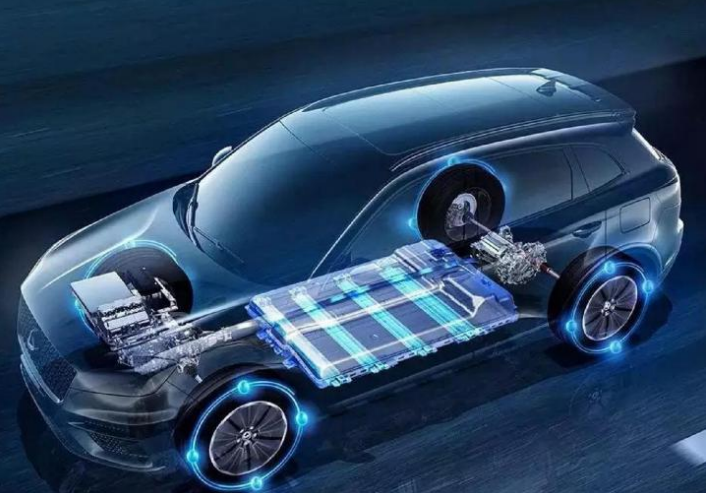
Aerogel insulation sheet manufacturers believe that the primary power source for new energy vehicles comes from the lithium-ion battery system, which determines the vehicles’ driving performance, safety, and service life. A lithium-ion battery system typically consists of battery modules, a battery management system (BMS), a thermal management system, and various electrical and mechanical systems. A lithium-ion battery module is composed of anywhere from a few to several hundred battery cells connected in parallel and in series.
Aerogel insulation sheet manufacturers believe that under various driving conditions and environments, individual battery cells generate a certain amount of heat while outputting electrical energy due to their internal resistance, causing their temperature to rise. High temperatures and violent collisions are the primary causes of damage to lithium-ion batteries, leading to combustion and explosions. However, during operation, power battery systems generate a large amount of heat within the confined space of the battery compartment. If this heat cannot be dissipated quickly and efficiently, the lifespan and performance of the battery modules will be significantly affected; in extreme cases, uncontrolled heat buildup can lead to fire or explosion.
Aerogel insulation sheet manufacturers believe that the primary function of fire-resistant and thermal insulation materials is to delay or prevent the spread of heat and flames, thereby providing passengers with sufficient time to evacuate the accident scene. Typically, in battery factories or vehicle assembly plants, fire-resistant and thermal insulation materials are used between the batteries and the top covers of modules and battery packs. Currently, common thermal insulation materials for power batteries include foam, plastic foam, ultra-fine glass wool, high-silica wool, and vacuum insulation panels. However, only aerogel can withstand temperatures for 300 seconds.
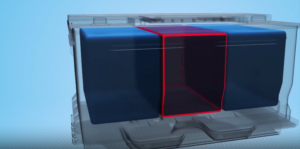
Aerogel insulation sheet manufacturers note that silica aerogel is a porous solid material with gas as its dispersing medium and is currently one of the lightest solid materials used in engineering. Aerogel has a low thermal conductivity, excellent thermal insulation properties, and is non-combustible. Compared to traditional insulation materials, aerogel achieves the same insulation effect with only 1/5 to 1/3 of the thickness, saving more space for power batteries while providing more stable insulation performance and temperature control.
Characteristics of aerogel insulation sheets:
1. Fire resistance. Excellent fire-retardant properties ensure the optimal operating temperature for lithium-ion batteries, while also providing valuable time for safe evacuation in the event of an accidental fire;
2. Low thermal conductivity. Its low thermal conductivity and excellent thermal insulation properties allow for a thinner insulation layer, effectively improving space utilization within the battery pack;
3. Long service life. Excellent water resistance ensures a longer service life;
4. Safe and environmentally friendly. Non-toxic, harmless, and non-polluting.
The development of new energy vehicles is the inevitable path for China to transition from a major automotive nation to a leading automotive power; it is a strategic initiative to address climate change and promote green development, as well as an effective measure to achieve “carbon neutrality.” The application of aerogel insulation sheets in new energy vehicles can better facilitate battery temperature control, electronic control management, and performance enhancement, while providing thermal insulation and fire protection, thereby giving users and passengers more time to evacuate the scene and extinguish fires. It is currently the thinnest and most efficient thermal insulation material suitable for new energy vehicles and lithium-ion power batteries.
Leave a Reply