
Aerogel Insulation Sheets: What Are the Functions of Aerogel Sheets?
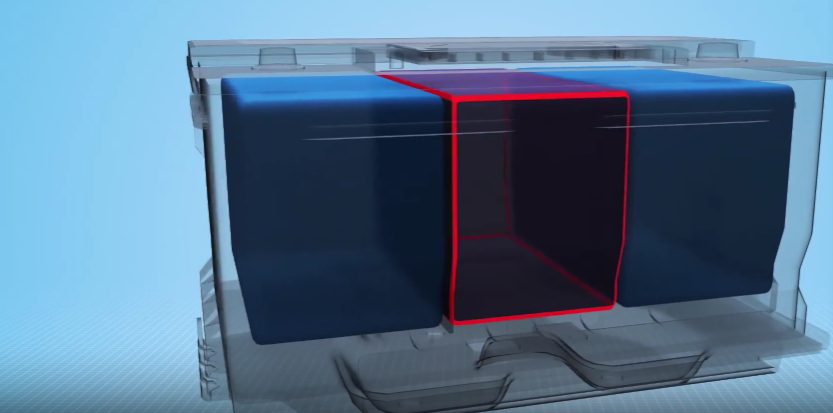
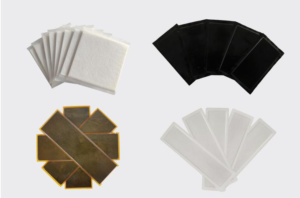
Aerogel insulation boards are a type of composite material derived from aerogel and used for thermal insulation. Made primarily from nano-silica aerogel and formed into flexible insulation mats through a special manufacturing process, what are the functions of aerogel insulation sheets?
Aerogel Insulation Sheets: What Are the Functions of Aerogel Sheets?
1. Due to its low speed of sound, silica aerogel is also an ideal material for acoustic delay or high-temperature sound insulation. This material has a very wide range of acoustic impedance (10³–10⁷ kg/m²·s), making it an ideal acoustic impedance coupling material for ultrasonic transducers. For example, piezoelectric ceramics with an acoustic impedance of ZP = 1.5 × 10⁷ kg/m²·s are commonly used as ultrasonic transmitters and detectors, whereas air has an acoustic impedance of only 400 kg/m²·s. Using silica aerogel with a thickness of one-quarter of the wavelength as an acoustic coupling material between the piezoelectric ceramic and air can improve sound wave transmission efficiency and reduce the signal-to-noise ratio in device applications. Preliminary results indicate that silicon aerogel with a density of approximately 300 kg/m³ can increase sound intensity by 30 dB when used as a coupling material. If silicon aerogel with a density gradient is used, even higher sound intensity gains are expected.
2. Environmental Protection and the Chemical Industry. Nanostructured aerogels can also serve as a new type of gas filtration material. Unlike other materials, this material features a uniform pore size distribution and high porosity, making it a highly efficient gas filtration material. Due to their enormous specific surface area, aerogels hold broad application prospects as novel catalysts or catalyst supports.
3. In the field of energy storage devices. Carbon aerogel is a conductive, porous material obtained by sintering organic aerogel; it is a new type of carbon material developed following fibrous activated carbon. It possesses a large specific surface area (600–1,000 square meters per kilogram) and high electrical conductivity (10–25 seconds per centimeter). Additionally, its density varies significantly (0.05–1.0 grams per cubic centimeter). For example, when the microporous structure is filled with a suitable electrolyte, it can be used to fabricate a new type of rechargeable battery with excellent characteristics such as high storage capacity, low internal resistance, light weight, strong charge-discharge capability, and reusability. Preliminary experimental results indicate that the carbon aerogel has a charge capacity of 3,104 C/kg² and a power density of 7 kW/kg, with good repeatable charge-discharge performance.

4. In research on the quantum size effect in materials. Since quantum dot structures are formed within the nanonetwork of silica aerogel, results from Si doping via chemical vapor infiltration and C60 doping via the solution method indicate that the dopants exist in the form of nanoparticles, and strong visible light emission has been observed, providing strong evidence for the quantum confinement effect in porous silicon. By leveraging the structure of silica aerogel and the nonlinear optical effects of C60, a new type of laser protective goggle can be further developed. Doping is also an effective method for forming nanocomposites.
5. Furthermore, silica aerogel is a material with an adjustable refractive index. By using aerogel media of different densities as Cherenkov threshold detectors, the mass and energy of high-energy particles can be determined. Since high-speed particles easily penetrate porous materials and gradually decelerate, a “soft landing” is achieved. For example, by selecting a transparent aerogel to capture high-speed particles in space, the particles that are blocked and captured can be observed with the naked eye or under a microscope.

Leave a Reply